The Ugly Side of Social Media

By: Cristina Menendez

Social media is a powerful tool that allows us, to communicate with each other regardless of distance and time zones. It’s accessibility is what attracts millions to use multiple platforms like Instagram, Facebook, Twitter, TikTok, Snapchat, and LinkedIn. These social platforms all serve a purpose for the person creating the account, however, that person is sacrificing their privacy, and in extent exposing their “true” identity. Adults rarely believe they will be victims of identity theft or defamation because they are cautious. Truth of the matter, a grand majority are affected, and this number will only increase exponentially.
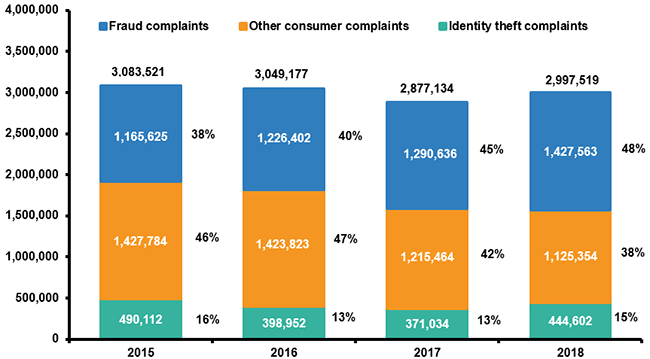
Identity Theft And Fraud Reports, 2015-2018 (1)
Source: Federal Trade Commission, Consumer Sentinel Network.

This is an adult’s nightmare. If this could potentially happen to adults, then what happens to kids that are using these same platforms?

Children are impressionable and easily manipulated in order to seem “cool” and be part of the “in” crowd. They are the most exposed demographic of these social media platforms because they tend to over share and their accounts tend to be public (to find more friends). These friends could be classmates from your children’s classes or they could be predators that search and groom children to take advantage of them. The video below is a real experiment from a tech company, Bark, that creates fake profiles to capture predators and pedophiles. Their results are horrifying and will shock any misinformed parent.

A parent’s purpose should be to protect their child at all cost. Therefore, if included the video below so that you as a parent could start acting now and educating yourself because the safety of your child depends on your actions.

Next Project: Lobbying?

By: Cristina Menendez

Recently M&Co. has been in contact with the CEO of Politics for the People, Jean Carballosa.

Mr. Carballosa’s company tries to bring political awareness to people in communities that would not have access to political information as readily as they should. He was interested in Repster when I expressed to him how I’ve been wanting to crack down more on the youth being able to access and use social media platforms that are uncensored. He said that although the app idea is “stellar” he still believes that I should pursue mayors, congressmen/congresswomen, and house of representatives to bring attention to this problem that a lot of youth and parents are not aware of.

Therefore, we’ve decided to collaborate to bring the community and political officials together in my fight towards social media censoring and the necessity for Repster in children’s lives.

Updates to come!

If you are interested in volunteering or being in the Repster Crowd circle, then sign up with our news letter and click the link to get more involved with us!

Talking to your child about Social Media

By: Cristina Menendez

What do black, white, hispanic, Native American, Asian, African , and animals all have in common?

We protect our own.

Regardless of how dysfunctional or perfect your family/unit is, at the end of the day you care about them and they care about you.

Children are usually the focal point of the unit because their upbringing is essential to how they’ll be as adults. All of the humans mentioned above care for their child and their safety yet it amazes me how many parents don’t sit down with their kid, after a certain age, and just talk about issues that they should be more receptive to. One of these issues aside from surfing the web, is using social media correctly.

First of all as parents we know that there are only a certain amount of hours in the day and sometimes you don’t notice the latest fad or the world evolving, sometimes you don’t notice that your kid even starts swearing or when your child is having difficulty in certain school subjects. That is ok. You can’t be there for everything, but you should try to be observant and stay alert.

A lot of parents believe that their child starts using social media when their child has a phone and this is not true. As long as they have access to a computer, they have access to wide range of social media platforms, so talk to them.

What should you talk to them about?

  • Who they should have as friends/followers.
  • What they should and should not be seeing.
  • What they should and should not be posting.
  • That a real person is on the other end of the screen.
  • That they should come to you when there’s an issue.
  • They should be honest with you about what they are doing on that platform.
  • Setting standards/restrictions.

If you as a parent have access to a world of people on your social media platforms, then so do they. Also, if you know the wide range of content that exists on certain platforms then you should restrict access if you do not think your child should be seeing it. Lastly, get involved with the social media your child likes; maybe you will like it as well and you will use it as much as them. This allows you to be in the know of all things that your child might be exposed to, and also gain some of the same interests for bonding purposes.

Why do we use Social Media?

By: Cristina Menendez

As adults we think that we know better than to talk to strangers or let ourselves be in harms way…but are we really aware of our interactions when using social media?

The first rule that we are taught as toddlers is to not speak to strangers. This rule was put in place for our safety, our parents enforced it so that when we weren’t with them we would be able to still obey it. However, do we? In this massive technological era where we can talk to anyone we want on the planet. Talking to strangers doesn’t seem so bad because that person doesn’t personally know you, they only have the information that you put out, and in most cases they are physically miles away from you.

Does this mean it’s still safe to talk to strangers?

No!!!!! One of the main problems that a lot of users face is the myriad of information they are constantly displaying for others to see. Although, these users publish this information with the intention of sharing it with the people they know, a lot of this information gets published for the world to see. Moreover, a lot of users want followers and online presence, they allow people that they don’t know so that they can have a wider range of people viewing their content, thus more online presence. These two cases of wanting a lot of followers and oversharing create a the dilemma of identity theft and the false pretense that your followers know you and you don’t know them.

When you speak to people regularly and then you meet them in person it should be a smooth transition however with the rise of social media and the fact that talking to said person is facilitated through texting, calling, and FaceTime; when these individuals meet it tends to be awkward and not the same energy is there. Also, it can be very dangerous because there’s always the chance that the person was lying about their identity.

With all this said, why do we use social media?

We should be using social media platforms for the function they are intended to be used in. What do I mean? If you have a facebook you should use it as your personal account that contains only family members and people that you know. If you’re using LinkedIn, then you should have a professional profile that contains people in your sphere and people that you want to reach out, but it’s a safer platform because it is business oriented.

All of these platforms give you the option to make your profile public or private, obviously the end result lies within you, but I would recommend for you to put in private and if you do want to talk to strangers and it’s alright if you do; just make a second account that doesn’t contain too much information about your person or your family.

Design a site like this with WordPress.com
Get started